Building Across Borders: How to Beat Hybrid Friction When the Clock is Ticking
I’m writing this from my desk back in the UK, but mentally, I’m hundreds of miles away in a dusty apartment in Venice.
Through a mix of summer plans and navigating Brexit visa requirements, we are currently managing a major property renovation from afar. We aren’t just putting in a new kitchen and updated bathrooms; we are coordinating highly specialised, traditional finishes like microcement floors and Venetian calce (lime) paint. There is a lot to do, a massive amount of detail to get right, and we cannot physically step onto the site to check a single thing.
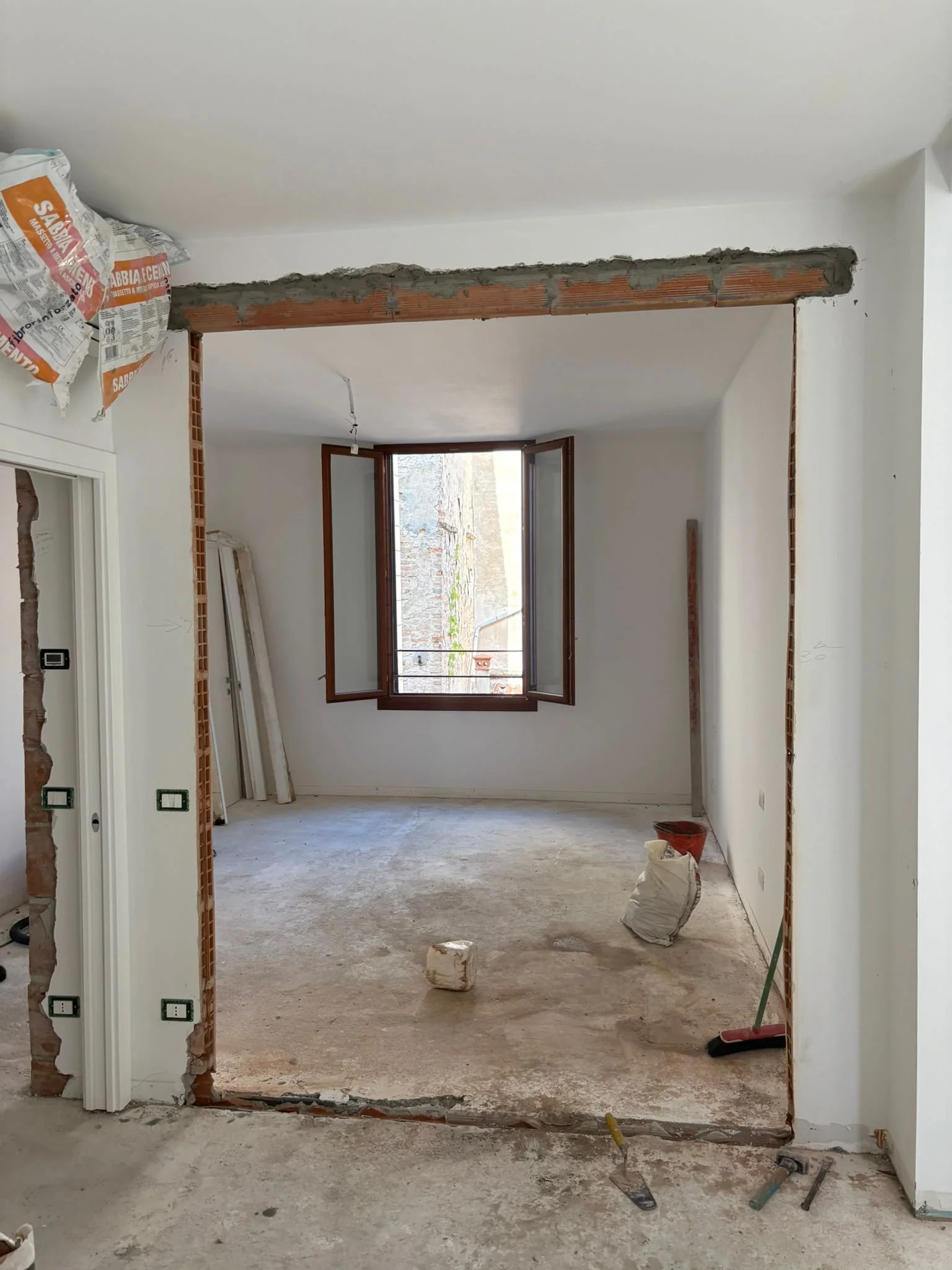
The view into what will (hopefully!) be a relaxing sitting room!
To add to the pressure, we have a hard completion deadline of October. Standing squarely between us and that deadline is August—the month when the Italian workforce almost entirely pauses for the traditional summer holidays.
If you have ever managed a global team, navigated a high-stakes corporate transition, or struggled with the daily friction of hybrid working, this scenario probably feels incredibly familiar.
Managing a complex physical build from another country is the ultimate stress test for remote leadership. The challenges are identical to corporate project delivery: How do you maintain momentum, align expectations, and build deep trust when you aren’t in the room?
The Hybrid Friction: Why "Checking In" Fails
When leaders feel the pressure of a looming deadline from a distance, the default reaction is to grab the reins tightly. There is the fear that if you can't see the progress, it isn't happening.
In a hybrid corporate setting, this usually manifests as:
Constant, ad-hoc "pings": "Quick update on this?" "Where are we on that?"
Hour-long alignment meetings: Scheduled weekly or fortnightly, usually spent looking backward at things that happened days ago.
The Invisible Hover: Micromanagement disguised as "support."
This approach doesn’t create control; it creates noise, signals a lack of trust, and actively slows the work down. If my builders spent all day answering progress emails, they wouldn't have time to lay the floors.
To succeed, we have to shift our mindset from monitoring presence to enabling progress.
The Agile Solution: The Pragmatic Huddle
In Scrum and Agile frameworks, the standard remedy for remote friction is the daily 15-minute stand-up. But Agile is ultimately about adaptability, not rigid rules.
Because we are managing this from the UK, we’ve established a rhythm of high-focus huddles two to three times a week. It’s frequent enough to maintain intense momentum ahead of the August shutdown, but spaced enough to give the Venetian team the autonomy to actually execute.
During these short, sharp sessions, we don't debate design theory. We focus on three simple things:
What has been completed since we last spoke?
What is the immediate focus next?
What is blocking progress?
This regular heartbeat prevents small misunderstandings from compounding into expensive, slow-motion mistakes. When you only have weeks left on the clock, catching an error on a Wednesday instead of the following Monday is the difference between meeting your October deadline or missing it entirely.
From the Construction Site to the Boardroom: A Corporate Reality Check
If this sounds too idealistic for corporate environments, it aligns perfectly with the reality of complex project delivery.
On a major corporate programme I worked on, the team had fallen into the trap of fortnightly alignment meetings. They lasted two painful hours. By the time we sat down, the updates were outdated, blockers had stalled progress for days, and the team was thoroughly disengaged.
Another Organisational Change Management (OCM) colleague and I decided to shake things up. We scrapped the fortnightly marathon and introduced the team to a daily catch-up routine.
To make it work, we introduced a couple of critical, human rules:
Cameras on wherever possible: This was a tough sell. A lot of our IT contractors hated the idea of being on video. But we pushed for it because visual connection is the foundation of empathy. You can’t decode hesitation, frustration, or relief over a muted audio line. Seeing each other's faces transformed how we collaborated.
The Intentional Mood Check: We introduced a light-hearted temperature check, usually ahead of the weekend on a Friday. Crucially, we didn't force it every day. As a change leader, you have to constantly sense the mood of the team and be ready to pivot to something else the moment an exercise starts to feel forced or transactional.
The result? We replaced dry status-reporting with actual human connection. Trust grew, blockers were cleared in minutes instead of weeks, and delivery velocity skyrocketed.
Trust is Built on Reliability, Not Surveillance
Ultimately, trust in remote and hybrid teams isn't built through forced corporate social events. It is built through reliability and psychological safety.
By establishing a predictable, structured communication rhythm:
You give the team autonomy: They know they have a dedicated window to ask questions and raise issues, leaving them free to focus on their craft in between.
You build mutual respect: When the team flags a blocker and sees you immediately work to resolve it from across the continent, trust is forged.
If a cross-border team can coordinate delicate, highly specialised physical construction under tight time constraints using pragmatic Agile principles, your corporate team can absolutely use them to ship your next major project.
The Takeaway for Leaders
Whether you are trying to beat a summer shutdown, manage a cross-border project, or get a fractured hybrid team pulling in the same direction, the blueprint is the same.
Stop trying to replicate the heavy, constant presence of the traditional office. Success in the hybrid world lies in rhythm, focus, and trust. Establish your huddle, turn your cameras on, clear the blockers, and trust your experts to build.
Let’s Keep Talking
Connect with me on LinkedIn to continue the conversation around organisational change management, communications, and sustainable transformation.
