What Kind of Unkind God Designed the Bat? (And What It Means for Leadership)
I am loving spending time in Somerset at the moment. Dusk is a special time as the countryside slows down and the nocturnal animals take over. A couple of weeks ago I joined a local bat walk equipped with specialised bat detectors and real-time frequency identification software. As I stood in the twilight watching a large Serotine bat swoop overhead—its ultrasonic calls popping and clicking through our handheld monitors—I couldn’t help thinking what an amazing creature the bat is.
Serotines are one of the UK’s largest bat species and they navigate the dark with pinpoint echolocation as they hunt over pastures and woodland edges. But when you look a little closer at the physical mechanics of a bat, a different thought strikes you: what kind of unkind god would design it like this?
The mammalian solution to flight is much clunkier than the solution birds ended up with. Bats’ wings are mammalian hands, with impossibly elongated fingers and skin stretched between them. And, because evolution can only tweak what already exists, bats carry an absurd amount of evolutionary baggage: their knees point backwards, they can barely crawl on flat ground and their legs are too weak to launch them into the air—forcing them to hang upside down just to take off.
It is an incredible aerial display, but an undeniably messy workaround.
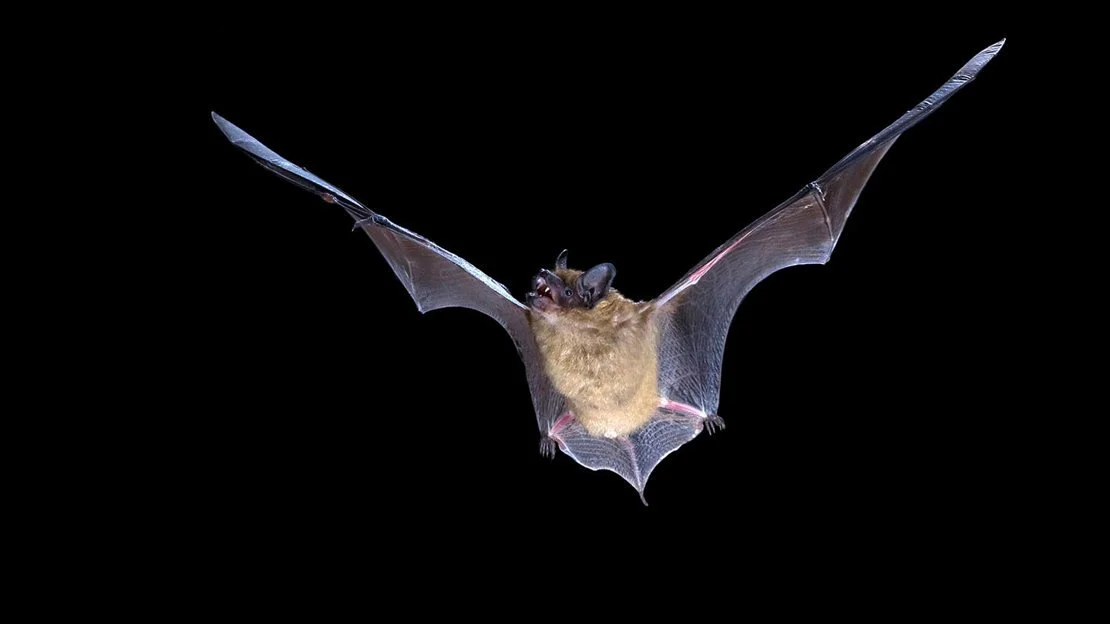
Serotine bat. Learn more about these remarkable British flying mammals and woodland conservation via the Woodland Trust.
The Myth of the "Ruthless" CEO
We often imagine nature as a ruthless CEO—swiftly cutting inefficient processes and liquidating whatever doesn't yield a profit. But evolution is actually a terrible manager. It never redesigns from scratch and it certainly doesn't optimise for perfection.
Nature optimises purely for "good enough to survive." As long as a messy, awkward workaround doesn't literally cause extinction before reproduction, evolution leaves it in place forever.
In corporate life, we fall into the exact same trap through survivorship bias. We look at a functioning department or a long-standing workflow and assume it was intelligently engineered for maximum efficiency simply because the organisation continues to operate. We evaluate the surviving structure while remaining blind to the invisible friction it creates every day.
In reality, most organisations are full of "bat-wing" processes—awkward workarounds accumulated over years simply because the company hasn't collapsed under their weight:
Ghost Governance: Approval steps created for a manager who left five years ago, persisting due to confirmation bias about "how things are done."
Workaround Spreadsheets: A complex sheet built to bridge two systems that were supposed to be integrated in 2020, anchored by historical necessity rather than current technology.
Fear-Based Armour: A 10-point checklist introduced after a single, isolated mistake that occurred three years ago—a classic instance of the availability heuristic overriding objective risk assessment.
When we fail to audit these habits, we aren't managing—we are just letting natural selection run wild, cluttering our organisations with evolutionary debt.
We Are Not Bound by Natural Selection
Here is the crucial difference between biology and business: nature is stuck with its evolutionary history, but we aren't.
Bats are trapped with backward knees forever. But in organisational life, we have the agency to look at an awkward, friction-heavy process and say: "If we were designing this from scratch today, we would never build it like this."
How Psychological Safety Defeats Goodhart's Law in Retrospectives
When an organisation lacks psychological safety, retrospectives quickly fall victim to Goodhart’s Law ("When a measure becomes a target, it ceases to be a good measure").
In an insecure culture, metrics like sprint velocity, completed checklist items or strict process compliance become targets used for self-preservation. Teams start performing for the metric rather than the outcome. “Busywork” feels safe because it leaves an audit trail; following a 10-step legacy checklist proves you did your job, even if the result was entirely redundant.
When leaders establish genuine psychological safety, the dynamics of the retrospective shift entirely:
From Compliance to Pruning: Team members no longer need the "armour" of vestigial processes. They can admit a process is useless without fear of being accused of corner-cutting or laziness.
Separating Output from Value: It becomes safe to highlight that completing 100% of assigned tasks (a vanity metric) actually created zero real-world value because three of those steps were "ghost" requirements.
Exposing Systemic Debt: People feel secure pointing out awkward "bat-wing" workarounds without worrying they are insulting the person who built them five years ago.
In Scrum and Agile frameworks, retrospectives shouldn't just be about adding new tasks to the backlog to look productive. Their true power lies in acting as an evolutionary audit—giving your team explicit permission to prune the messy, awkward workarounds and redesign the workflow for the world as it exists today.
3 Ways to Run an "Evolutionary Audit" in Your Next Retrospective
Ask the "Deletion Question": Instead of asking "What should we add or fix?", dedicate the first ten minutes strictly to: "What step did we perform this sprint that created zero value for the end result?"
Expose "Performative Velocity": Challenge metrics that reward throughput over impact. If a high velocity score relied on filling out redundant documentation, mark that process as an evolutionary debt item to dismantle.
Praise the Pruning: Publicly celebrate team members who propose deleting a legacy approval step or retiring a spreadsheet. Make process elimination just as prestigious as launching a new feature.
💬 Join the Conversation
What "vestigial baggage" or awkward workarounds have you uncovered in your organisation recently? How do you spot and prune them? Need an evolutionary audit of your team's workflows? Let's talk.
