What Did the Romans Ever Do for Us?
Apart From Teaching Us How Not to Micromanage
“Never let the future disturb you. You will meet it, if you have to, with the same weapons of reason which today arm you against the present.” — Marcus Aurelius
Marcus Aurelius scribbled those words nearly two millennia ago from a freezing, mud-slicked military tent along the Danube frontier. When he became Emperor of Rome in 161 AD, he inherited an empire suddenly buckling under simultaneous, existential crises: a devastating plague, an economic tailspin and brutal war along the northern border. He had every reason to panic, lock down decision-making and micromanage every legionary commander from his tent.
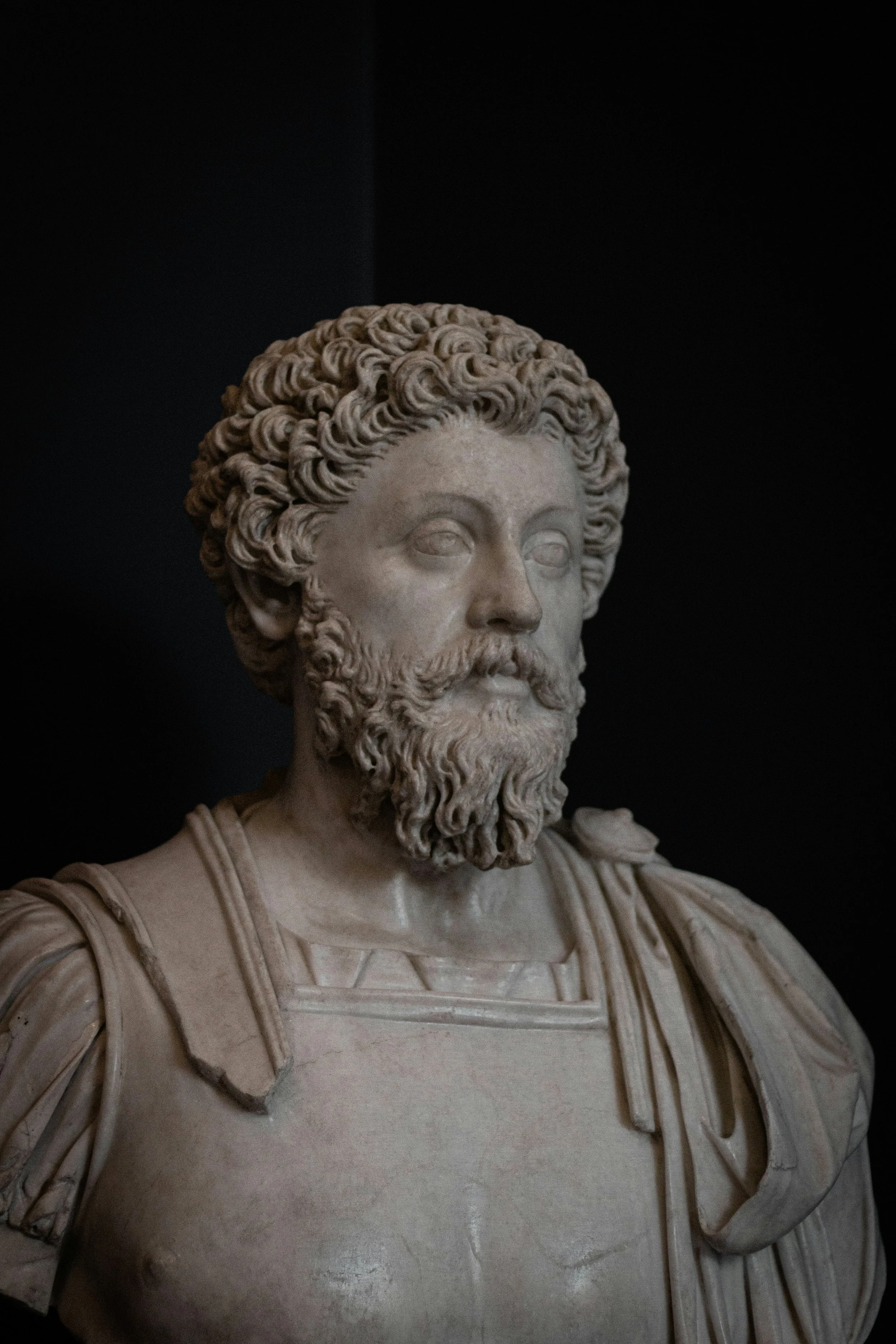
Photo by Adrian Botica on Unsplash
Instead, he did the exact opposite.
Marcus Aurelius understood a fundamental truth that modern corporate executives continually struggle to grasp: under extreme pressure, your instinct to tighten your grip will crush the very execution you are trying to save.
Having written recently about Winston Churchill, I promise I am not trying to turn this blog into a regular series on historical wartime leaders. Nor do we normally hold up Roman emperors as shining examples of modern workplace culture—Nero alone would have kept HR locked in mediation for a decade! Yet Marcus Aurelius remains a rare, vital exception for anyone trying to navigate high-stakes leadership today.
The Panic Button in the Executive Suite
In the corporate world, when a critical system rollout stumbles, a regulatory deadline looms or revenue takes an unexpected dip, a predictable psychological shift occurs in executive suites.
When leaders feel out of control, their default panic instinct is to squeeze tighter. They demand daily status updates, override Subject Matter Experts (SMEs) and insist on personally signing off on microscopic operational decisions. Psychologists call this control compensation. When macro outcomes feel terrifyingly uncertain, human beings seek comfort by over-controlling micro details. It creates the comfortable illusion of action while actively choking progress.
I felt the full force of this earlier in my career when working with a line manager whose anxiety manifested as relentless, line-by-line micromanagement. She would return draft communications covered in a sea of red pen—frequently demanding that I revert phrasing back to the exact wording she had explicitly asked me to remove in the previous round.
At the time, it felt maddening. But looking back with the benefit of experience, I realise she was caught in a classic corporate pressure cooker.
In our division-wide leadership meetings, the director above her operated with an iron grip, cross-examining managers on minor tactical details and demanding instant justification for every variance. Her micromanagement wasn't a personality flaw; it was a survival mechanism. Panicked about being caught unprepared in the next executive review, she passed that anxiety straight down the chain.
The effect on the team was immediate:
Disempowerment of experts: I found myself sitting at my desk wondering why on earth the organisation had hired a specialist if leadership felt the urge to ghostwrite every single sentence. The natural urge was to throw my hands in the air and hand over the keyboard: "If you want it done your way down to the semi-colon, be my guest."
Confidence replaced by self-doubt: Instead of focusing on strategic messaging, high-level positioning and project clarity, I wasted critical energy playing mind games: "Is the work actually off-target, or am I just managing someone else’s unaddressed anxiety?"
Breakdown of genuine dialogue: Every review meeting felt like walking a tightrope. When I tried to reset the dynamic using an adult-to-adult approach (borrowed from Transactional Analysis), the conversation hit a brick wall. The fundamental issue was never the copy on the page—it was the systemic fear cascading down from the top, projected entirely onto my punctuation.
In change management and corporate strategy, this pattern is poison. Execution grinds to a halt, SMEs retreat into defensive compliance and initiative dies because nobody wants to get their knuckles rapped for taking a risk.
How an Emperor Stayed Sane on the Frontline
Marcus Aurelius spent years on campaign applying what Stoic philosophy calls the Dichotomy of Control. He recognised that an emperor cannot personally control every battlefield outcome, every regional governor or every sudden economic shock. The only elements within his direct command were his own clarity of thought, his core principles and the trust he placed in his officers.
In modern organisational terms, Marcus Aurelius was practicing Mission Command. This doctrine relies on setting crystal-clear intent, defining non-negotiable strategic boundaries and then getting out of the way so the experts on the ground can exercise their own operational autonomy. He led through purpose rather than tactical interference.
Crucially, this isn't about abandoning governance or compliance—especially in heavily regulated sectors. Real governance provides clarity on standards and boundaries; micromanagement merely swaps objective standards for personal stylistic quirks and anxiety-driven interventions.
How to Stop Squeezing and Start Scaling
To prevent crisis pressure from turning your leadership into crippling micromanagement, apply these three core principles:
Measure competence not your own anxiety
Effective leadership is inherently situational. When a team member is a genuine novice, tight direction and close oversight make sense. But when leading seasoned specialists through a high-stakes crisis, reverting to rigid micro-instruction is not leadership—it is a panic response. Adapt your level of control to the proven competence of your team, not the volume of noise in your inbox.
Point to the destination, don't drive the bus
Your job as a leader is to define what success looks like and clearly articulate why it matters, not to dictate every gear shift along the way. Communicate the strategic destination clearly, ensure the team has the right fuel, then step back and let your specialists map the route.
Ask the 10-second gut-check question
Before demanding another tracking spreadsheet, line-editing a draft or inserting yourself into an operational workflow, pause and ask: Am I requesting this because it tangibly improves the outcome, or because it reduces my own anxiety? If it is the latter, close the tab, step away and let the people you hired do their jobs.
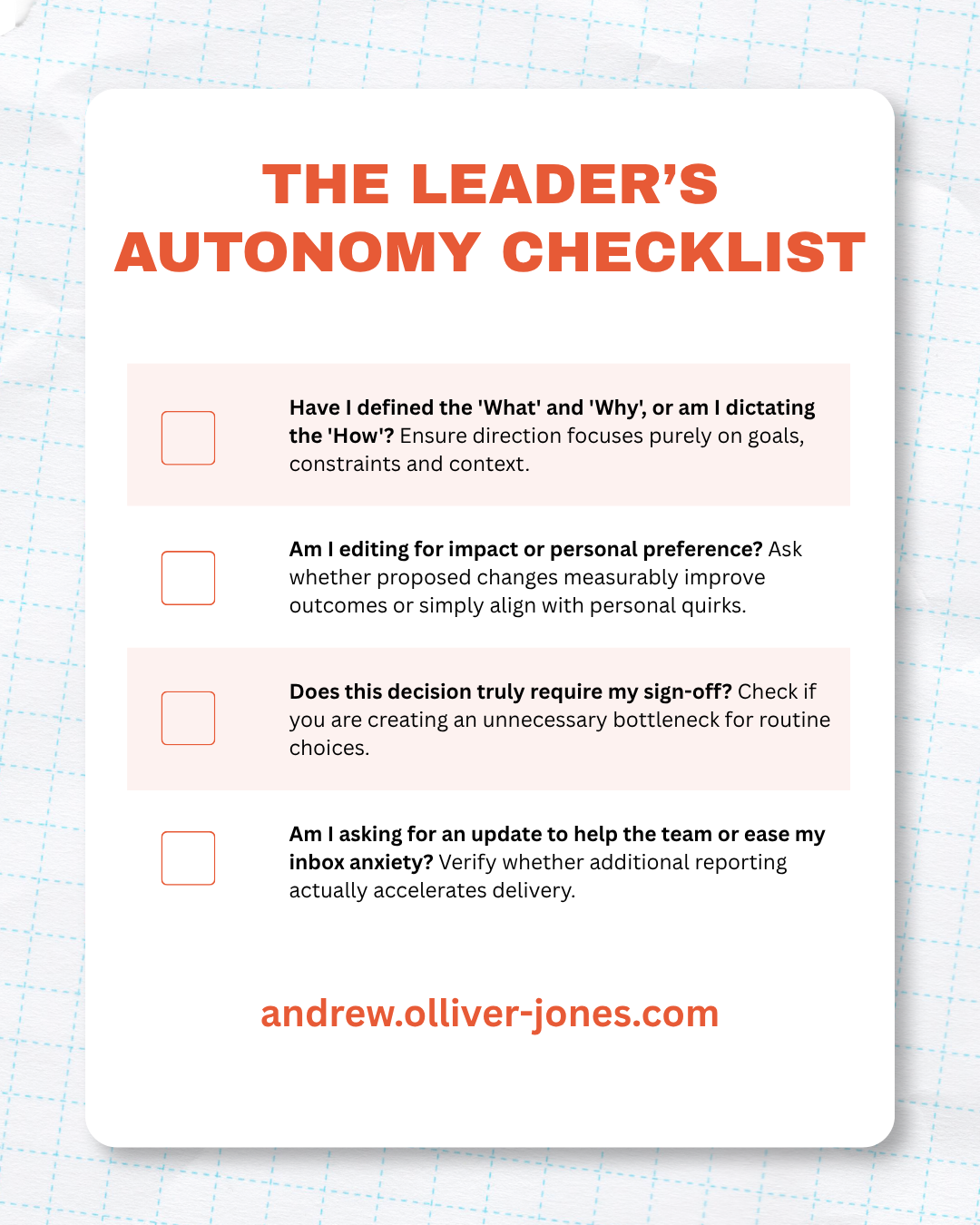
The Leader’s Autonomy Checklist
Before your next review session or project check-in, run through this quick 4-point gut check:
If you are leading an organisation through complex change and want to build high-trust, resilient teams that scale, feel free to reach out via my contact page or explore my other articles on organisational change management
