Productive Procrastination and the Endorphins of the "Big Project"
I’m sure I’m not the only one who falls into the "productive procrastination" trap.
As many of you know, my husband and I recently followed a dream and moved to Venice. But the reality is that even in a city this beautiful, I still have to work—and I still have to stay on top of the housework.
I took this photo after stepping out onto our altana (our rooftop terrace) to hang out the washing. The sun was out, there was just the right amount of breeze, and getting my shirts on the line gave me an instant buzz of endorphins—the sort we all get when we physically tick a job off the list. But as I finally sat down at the table with my coffee and laptop, I had to be honest with myself: I was using the housework as a delaying tactic.
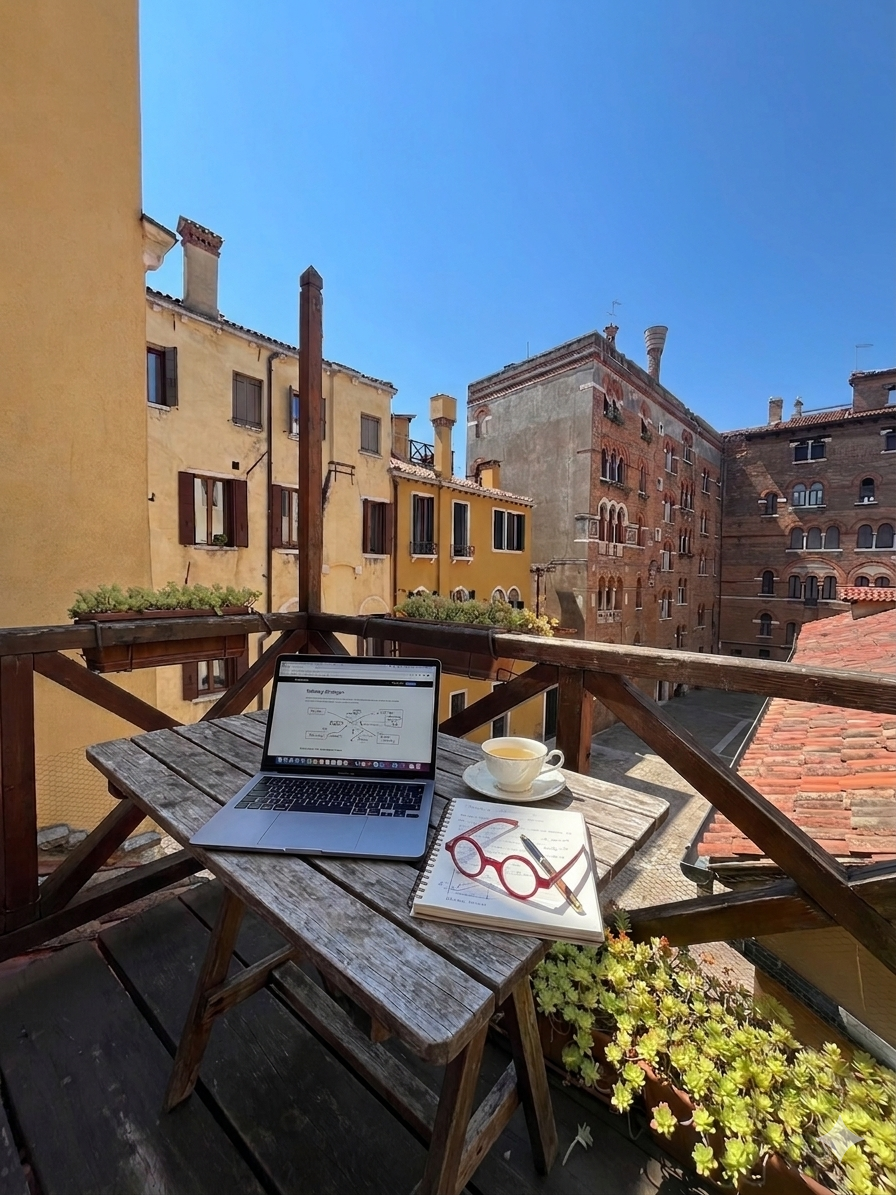
The view from my altana
Escaping the "Dread Zone"
It’s so much easier to do the chores than to tackle the more significant work. We all have those complex projects that really matter in the long run, but they often live in a kind of "dread zone" because they don't offer immediate gratification. It’s far too easy to feel busy while the most important things go undone.
I don’t have a perfect solution yet, but I’m leaning into two specific ideas to navigate this balance:
The Power of Routine: Building a scaffold for the day so that starting the big task becomes a habit rather than a daily choice.
The Grace of the Reset: Being kind to myself when things don't go to plan. If the morning is lost to chores or "small" tasks, I simply hit the reset button at 2:00 PM and start fresh without the guilt.
The trick isn't pretending the distractions don't exist—it's building the structure to work alongside them.
How do you protect your focus from the "buzz" of small tasks? And how do you stay kind to yourself when the plan falls apart?
I’d love to hear your perspectives and strategies. Connect with me on LinkedIn to join the discussion or share your thoughts.
